


For years, the design world was obsessed with the “clean” look of hard surfaces. Polished concrete, wide-plank white oak, and luxury vinyl tile dominated our social feeds and home renovations. But as we move further into 2026, the pendulum is swinging back. There is a quiet revolution happening underfoot, and it is soft, textured, and incredibly sophisticated.
Carpet is making a massive stylish comeback, but this isn’t the beige, wall-to-wall shag of the 1970s. It is a movement toward what we call “The Grounded Sanctuary”—a design philosophy that prioritizes wellness, warmth, and tactile luxury. Here is why carpet has reclaimed its throne in the modern home, and why wool, in particular, has become the “gold standard” for designers and homeowners alike.

The Shift Toward “The Grounded Sanctuary”
In a world that feels increasingly digital and fast-paced, our homes have become our primary recovery zones. The cold minimalism of the past decade is being replaced by a desire for “cocooning.”
Hard floors are beautiful, but they are also loud and physically unforgiving. Carpet and rugs provide a visual and acoustic softness that hard surfaces simply cannot match. They dampen the echoes of a busy household, soften the “thump” of footsteps, and create a literal soft landing at the end of a long day. This shift toward comfort—often referred to as the “Fat Furniture” or “Curated Curves” trend—naturally extends to the floor, where we are seeing a return to textural solids and plush foundations.
Explore “The Grounded Sanctuary” and more 2026 decor insights on our Design Trends blog.
The New Era of High-End Texture
In modern design, luxury is no longer defined just by what you see, but by how a space feels. Designers are increasingly looking for ways to soften the hard edges of modern architecture.
While carpet provides essential acoustic softness, the modern comeback is fueled by a new wave of architectural power. We are seeing a return to textural solids where the floor isn’t just a surface—it’s a canvas. With advancements in broadloom programs, like Kaleen’s 22’ x 100’ rolls, we can now achieve a near-seamless foundation in grand spaces, allowing the beauty of the material to speak without the distraction of joined lines.
The Artistic Superiority of Wool
While there are many synthetic options available, wool is the undisputed hero of this stylish comeback. When designers talk about the “luxury” of a carpet, they are usually referring to the specific aesthetic properties of wool.
- Unmatched Clarity of Color: Wool is a protein-based fiber with a highly absorbent inner core. This allows it to take in dyes deeply and evenly, resulting in a clarity of color that synthetics simply cannot replicate. In a synthetic rug, the color often sits on the surface, which can result in a “plastic” sheen. Wool possesses a natural matte finish that allows colors to look rich, saturated, and “true.” Whether it is a soft-toned heather or a deep, midnight indigo, the color feels organic and integrated.
- Light Absorption and Visual Depth: Synthetic fibers often have a high-luster “sparkle” that can look artificial. Wool fibers are naturally opaque, meaning they absorb light rather than bouncing it back harshly. This creates a visual depth that makes a room feel more grounded, providing a “hushed” visual elegance that adds character to even the simplest monochrome designs.
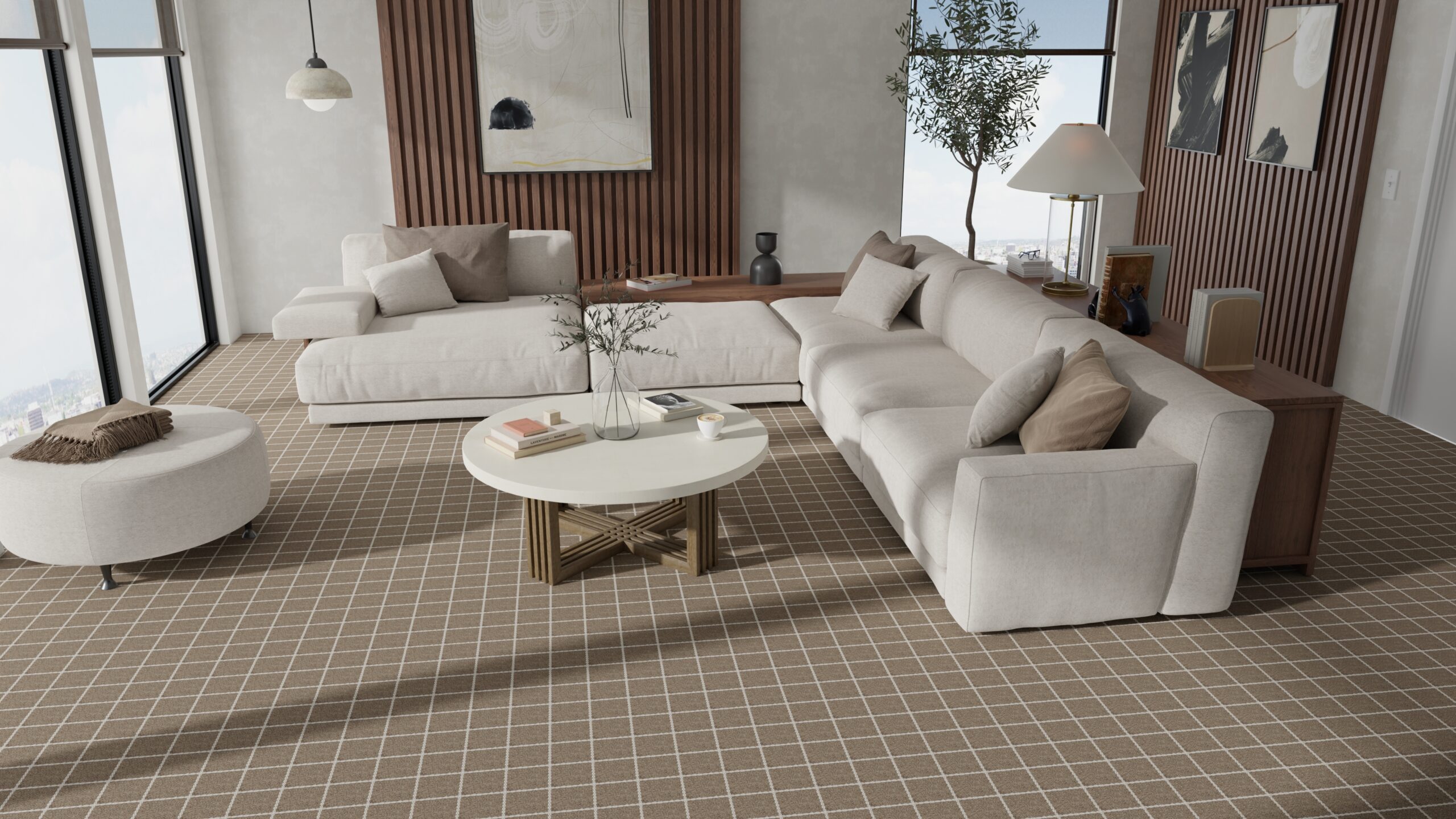
Sculpting the Floor: Texture as Architecture
The “new” carpet trend is heavily focused on relief and dimension. We are seeing a move away from characterless piles toward “sculpted” edges and couture-inspired details.
Take, for example, Keystone in Mink from Kalenn Broadloom. It frames a couture grid in a supple chain-stitch relief. When you combine this structural definition with a heathered ground—reminiscent of brushed tweed—you create a look that balances “city sleek” with “heirloom restraint.” Wool is essential here; its natural structural integrity holds the shape of the stitch and the crispness of the line better than any other material.
Pattern and Personality
As we embrace the carpet comeback, we are also seeing a bolder use of pattern in colors that extend beyond basic beige. Today’s broadloom offers architectural power through:
- Geometric Motifs: From refined chevrons to reimagined diamond patterns used as a sophisticated canvas.
- Tactile Relief: Sculpted edges and 3D elements that mimic couture fashion.
- Animal Prints: Leopard, zebra, and fawn have become the “new neutrals,” adding a wild yet timeless energy to hallways and offices.
Through Kaleen’s custom program, these patterns can be reimagined into rugs of a seemingly endless array of sizes and shapes, offering limitless possibilities to tailor your space and enhance the unique architecture of your home.
Beyond the Bedroom: Carpet’s New Territory
Traditionally, carpet was reserved for the bedroom. Today, it is migrating into the most high-profile areas:
- The Home Office: For acoustic privacy and “executive” comfort.
- The Grand Entryway: Using custom-sized wool rugs to create a “wow” factor.
- The Seamless Living Room: Using broadloom to provide a foundation of “city sleek” style that makes furniture look more grounded.
The New Standard of Underfoot Elegance
The return of carpet is a return to the idea that our homes should feel as good as they look. By choosing high-quality materials like wool and embracing bold, textural designs, you aren’t just following a trend—you are building a retreat that will stand the test of time.
Whether you are seeking the “sculpted edge” of a modern grid, the “organic warmth” of a heathered tweed, or the “wild at heart” energy of an animal print, the future of flooring is soft, sustainable, and undeniably stylish.
Frequently Asked Questions (FAQ)
Is carpet still a good choice for high-traffic areas like living rooms or hallways?
Absolutely. The “comeback” of carpet is largely due to the durability of high-quality fibers like wool. Unlike synthetic materials that can flatten or “track” over time, wool has a natural architectural resilience. Its fiber has a built-in “spring” that allows it to bounce back after being stepped on, making it ideal for the busiest rooms in a modern home.
How does wool carpet improve the air quality of a “Grounded Sanctuary”?
Contrary to the myth that carpet traps allergens in a harmful way, wool actually acts as a natural air filter. It captures dust, pollen, and common allergens, holding them deep in the fibers until they are vacuumed away. Furthermore, wool is a natural “VOC-absorber,” meaning it can help clear the air of common household chemicals, unlike some synthetic floors that may off-gas.
What makes Kaleen’s broadloom program different for large-scale homes?
Many standard carpets come in 12-foot widths, which often results in visible seams in large “grand spaces.” Kaleen’s offers 34 broadloom styles in massive 22’ x 100’ rolls. This allows designers to create a seamless, high-end look in expansive living areas or master suites, providing a more polished and custom feel.
Can I get carpet styles in a specific size and shape for my entryway?
Yes. One of the most exciting aspects of our program is the ability to transform any carpet into custom-sized and shaped rugs. From arches and ovals to organic shapes, our styles can be reimagined into a seemingly endless array of silhouettes—ensuring your carpet fits the architecture of your home perfectly.
Does wool carpet stay clean as easily as synthetic options?
Wool carpets are easy to clean due to their unique fiber structure with overlapping scales that repel dirt, naturally high elasticity to resist crushing, and inherent resistance to both water-based stains and dry soiling, allowing for simple vacuuming and immediate spot cleaning of spills. For more information, visit our care and cleaning section.
Is patterned carpet considered a “trend” that will go out of style?
The current move toward patterns—like geometric motifs and animal prints—is focused on “timeless character.” When rendered in high-quality wool with clear, deep pigments, these patterns act as “new neutrals.” They add a layer of personality and architectural depth that feels like a permanent design choice rather than a fleeting trend.


